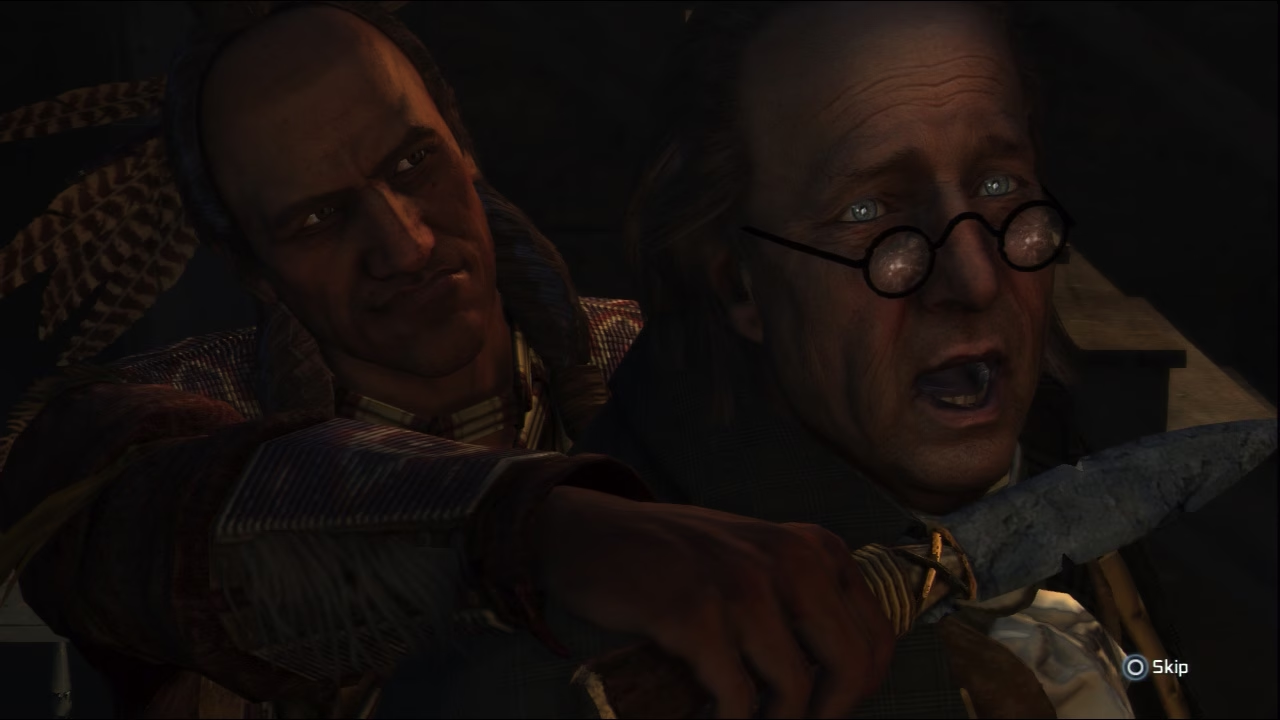
Over the years, Assassin’s Creed has established itself as a franchise that uses different historical periods as the setting for its stories. Each game features major events from the past, always placing the player at the center of these occurrences. Part of this world-building involves the presence of real historical figures. Kings, generals, philosophers, inventors, and political leaders appear as active characters in the narrative, crossing paths with the protagonists and directly participating in the events portrayed in each game.
Below are some of the historical personalities that are part of the franchise’s universe and stand out both for their relevance in the real world and for their role in the game’s story.
Leonardo da Vinci
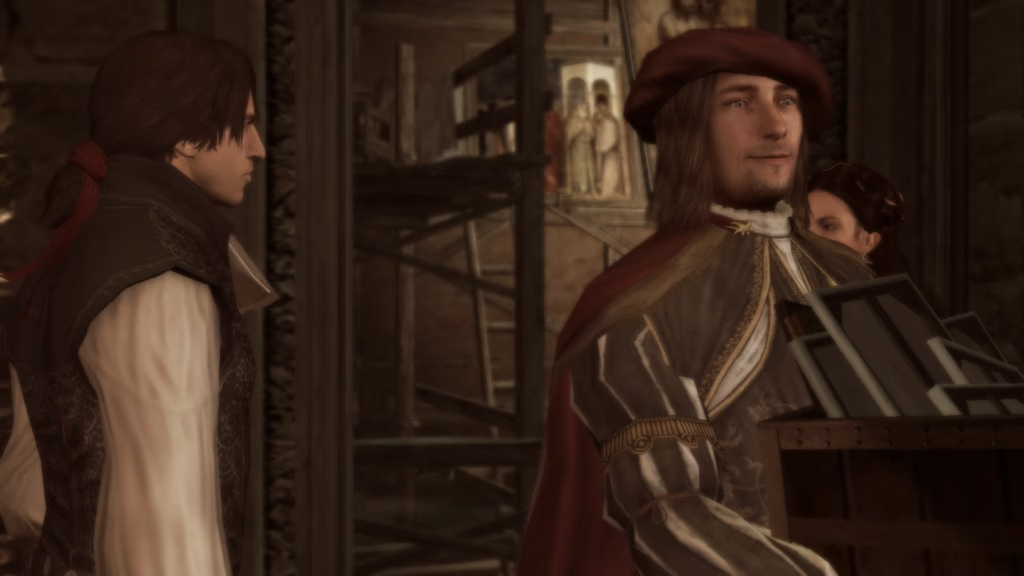
Leonardo di Ser Piero da Vinci was a polymath born in Tuscany, considered one of the most important figures of the High Renaissance. A scientist, mathematician, engineer, inventor, anatomist, painter, and sculptor, Leonardo is often described as the archetype of the “Renaissance man.” Works such as the Mona Lisa and The Last Supper are among the most famous paintings of all time. Beyond art, he conceived visionary projects like prototypes for helicopters, tanks, and the use of solar energy—ideas far ahead of his time.
In the games, Leonardo is a central character in Assassin’s Creed II and Brotherhood, where he acts as a close ally to Ezio Auditore. He is the one who deciphers Altaïr’s Codices and crafts innovative weapons and gadgets for the assassin. His insatiable curiosity and technological ingenuity make him an indispensable partner to the Brotherhood, even though he is never formally a member.
Napoleon Bonaparte

Born in Corsica in 1769, Napoleon Bonaparte rose to power during the French Revolution and became one of history’s greatest military strategists. In 1804, he crowned himself Emperor of the French, consolidating a vast empire that stretched across much of Europe. His historical legacy includes the Napoleonic Code, the strengthening of the French state, and the invasion of countries such as Portugal—which forced the Portuguese court to relocate to Brazil—and Russia. Ultimately defeated at the Battle of Waterloo in 1815, he was exiled to the island of Saint Helena, where he died in 1821.
In Assassin’s Creed Unity, set during the French Revolution, Napoleon appears as a historical figure at several crucial moments in the narrative. The protagonist Arno Dorian crosses paths with him in Paris, and the young general serves as both a supporting character and a central element in specific missions. Within the franchise, Napoleon maintains ambiguous ties with both Templars and Assassins, without formally belonging to either side.
Julius Caesar
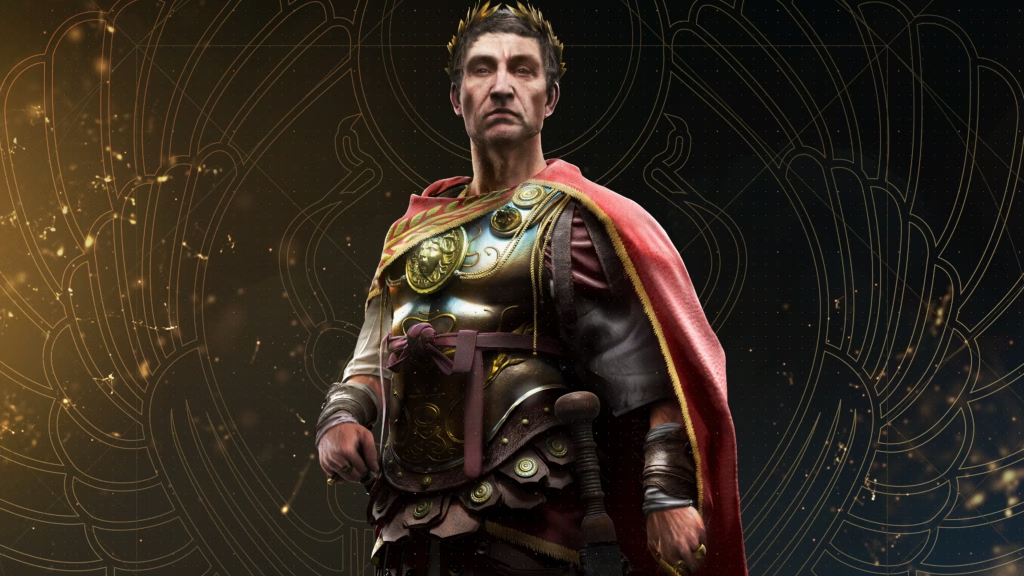
Gaius Julius Caesar was a Roman statesman, general, and writer who played a crucial role in the transformation of the Roman Republic into an Empire. His military campaigns, such as the conquest of Gaul, vastly expanded Roman territory. In 49 BC, by crossing the Rubicon river with his army, he sparked a civil war that led him to supreme power in Rome. He was assassinated on the Ides of March in 44 BC, stabbed by a group of senators led by Brutus and Cassius, in one of the most famous episodes in ancient history.
In Assassin’s Creed Origins, set in Ptolemaic Egypt during the 1st century BC, Julius Caesar is portrayed as a powerful and politically calculating character. The protagonist Bayek interacts indirectly with the consequences of his actions, while Aya, Bayek’s wife, has more direct contact with the Roman general. Caesar appears as an ally to Cleopatra, but his true interests are always power and the expansion of Rome.
Cleopatra
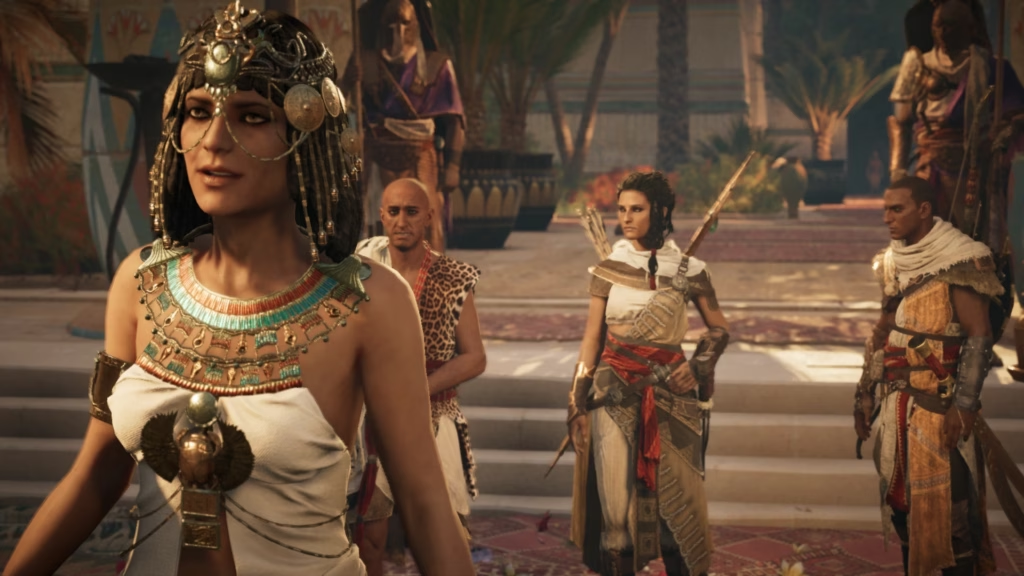
Cleopatra VII Philopator was the last active ruler of the Ptolemaic Kingdom of Egypt. Born in Alexandria around 69 BC, she was the daughter of Ptolemy XII and became a ruler of remarkable political intelligence and diplomatic skill. She spoke multiple languages and was the first Ptolemaic sovereign to learn the ancient Egyptian language. She established alliances with Julius Caesar and later with Mark Antony to maintain Egypt’s independence from Rome. Following Mark Antony’s defeat by Octavian, she died by suicide in 30 BC, ending the era of the pharaohs and making Egypt a Roman province.
In Assassin’s Creed Origins, Cleopatra is a main character in the narrative. Exiled by her brother Ptolemy XIII, she seeks the support of Bayek and Aya to reclaim the throne. Initially presented as an ally to the Hidden Ones, Cleopatra gradually reveals her opportunistic nature, manipulating the protagonists for her own political gain. Her relationship with the Order of the Ancients is a central plot point in the game.
George Washington

George Washington was the commander-in-chief of the American colonial forces during the Revolutionary War and the first president of the United States (1789–1797). Born in Virginia, he became a symbol of the American Revolution and the founding of the new nation. His leadership during the harsh winters at Valley Forge and his strategic victories against the British cemented American independence. He declined a third presidential term, establishing a fundamental democratic precedent that endures to this day.
In Assassin’s Creed III, Washington is a recurring and ambiguous character. The protagonist Connor, of Native American descent, collaborates with him during the American Revolution, although their relationship is marked by ethical tensions, particularly regarding the treatment of Indigenous peoples. In the DLC The Tyranny of King Washington, the series explores an alternate history where Washington becomes corrupted after obtaining supernatural power and turns into a tyrant, showing a dark facet of the “father of his country.”
Socrates

Socrates was an Athenian philosopher considered one of the founders of Western philosophy. His teaching method, the Socratic dialogue or maieutics, consisted of asking questions that led his interlocutors to examine their own beliefs and reach conclusions themselves. He left no writings; his thoughts have come down to us primarily through the dialogues of his student Plato. Sentenced to death in 399 BC by the Athenian court, accused of impiety and corrupting the youth, he drank hemlock and died without renouncing his philosophical convictions.
In Assassin’s Creed Odyssey, set in Ancient Greece during the 5th century BC, Socrates appears as a charismatic and provocative supporting character. The protagonist (Kassandra or Alexios) can interact with him in Athens, where the philosopher poses moral dilemmas and questions the hero’s choices, staying true to his historical style of asking uncomfortable questions. His appearances in the game are lighthearted and humorous, capturing the restless and ironic spirit of the Athenian thinker.
Queen Victoria
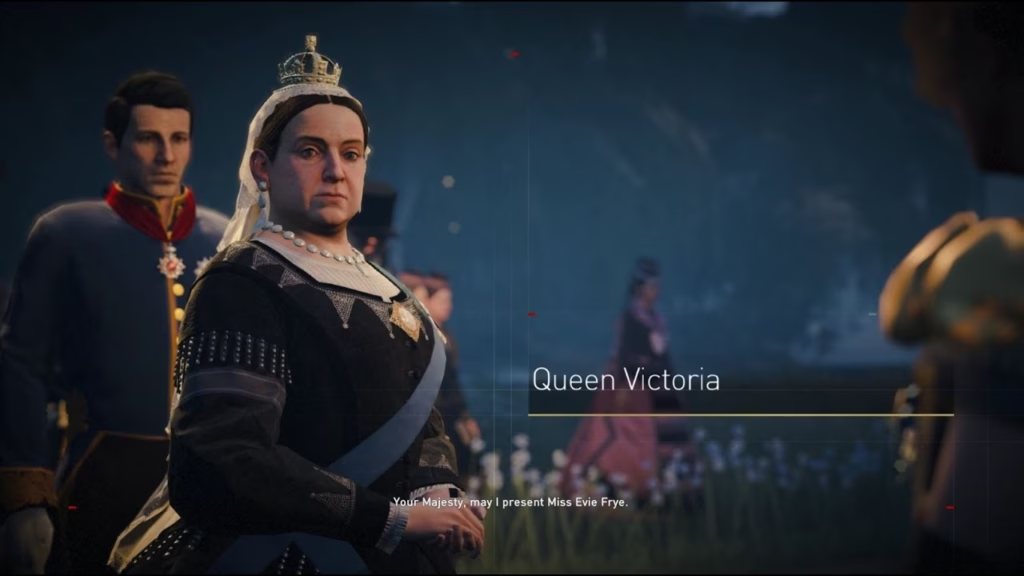
Queen Victoria was the monarch of the United Kingdom from 1837 to 1901, the second-longest reign in British history. Her rule coincided with the Industrial Revolution, the peak of the British Empire—which came to dominate about a quarter of the Earth’s surface—and profound social and technological changes. She became the symbol of an entire era: the Victorian Era. Married to Prince Albert, her death in 1901 marked the end of a century of global British dominance and the dawn of a new world order.
In Assassin’s Creed Syndicate, set in Victorian London in 1868, Queen Victoria is a background figure in the narrative. The protagonists Jacob and Evie Frye fight the Templars who seek to control the city and, by extension, the British Empire. The monarchy and the political power of the crown are central themes of the game, and Victoria represents the ultimate symbol of power that both Assassins and Templars seek to influence.
Richard I of England
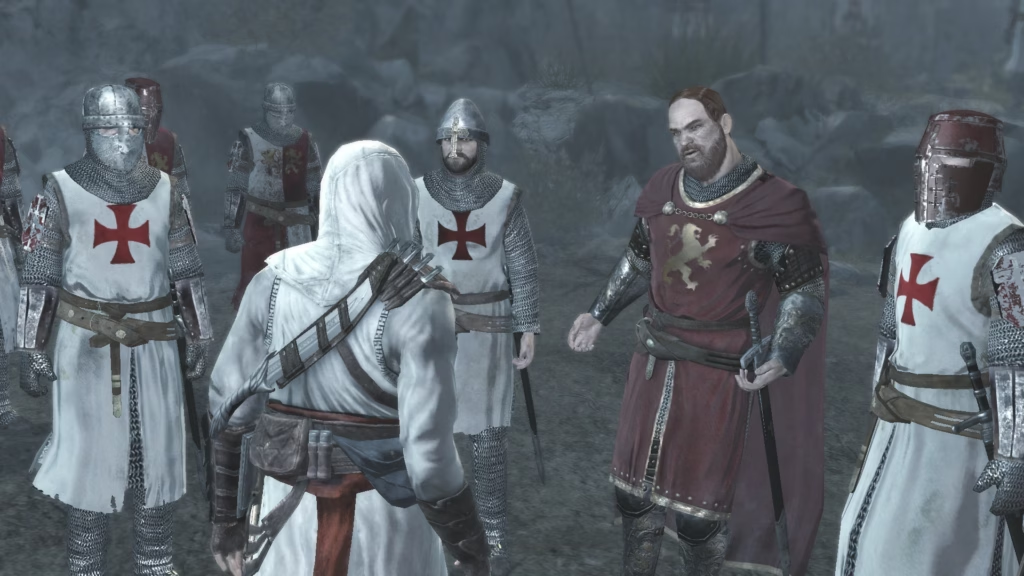
Richard I, known as Richard the Lionheart, was King of England from 1189 until his death in 1199. Famous for his courage and military prowess, he led the Third Crusade in an attempt to recapture Jerusalem from Saladin. Despite his heroic reputation, Richard spent less than six months of his ten-year reign on English soil, dedicating most of his time to military campaigns in the Holy Land and France. He died in 1199 after being struck by an arrow during a siege in France.
Richard the Lionheart is a central figure in Assassin’s Creed 1, the original game in the franchise, set during the Third Crusade in the Middle East in 1191. The protagonist Altaïr Ibn-La’Ahad operates in the shadows of the wars between Crusaders and Saracens, and Richard appears as one of the political leaders whose influence shapes the game’s world. His relationship with the Assassin Brotherhood is complex, reflecting the tension between Christian interests and those of the Syrian Assassins.
Alfred the Great
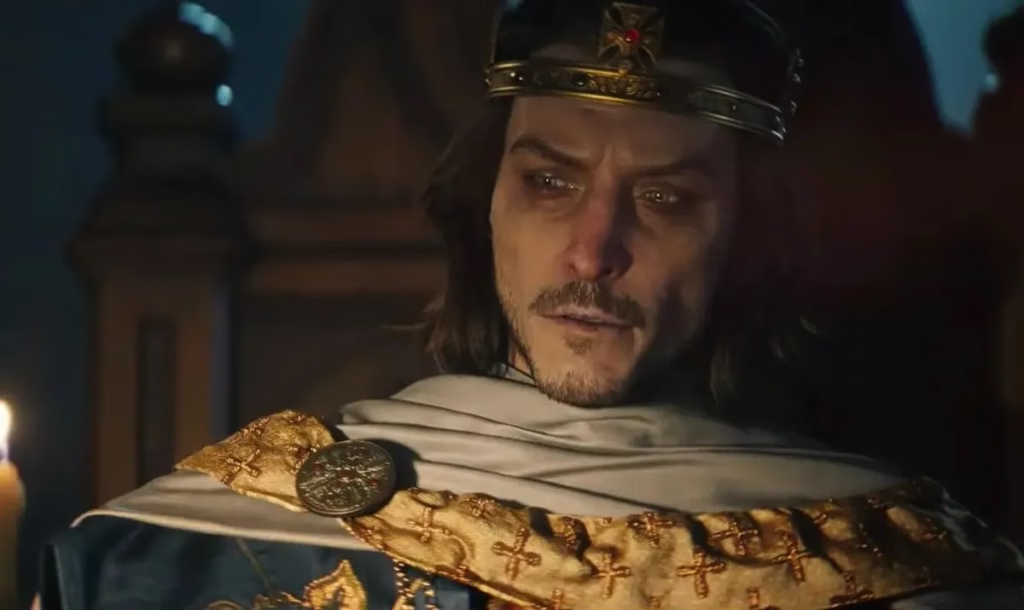
Alfred the Great was King of Wessex from 871 to 886 and King of the Anglo-Saxons from 886 to 899. He is the only English monarch to be given the epithet “the Great.” His reign was marked by resistance against Viking invasions, culminating in the decisive Battle of Edington in 878, which forced the Danes into a peace treaty. Beyond his military conquests, Alfred was a reformer who promoted education, the creation of laws, and the efficient administration of the kingdom, laying the groundwork for the future unification of England.
In Assassin’s Creed Valhalla, set during the Viking invasions of the 9th century, Alfred is a character of great narrative importance. The protagonist Eivor, a Viking warrior, faces the forces of the King of Wessex while seeking to establish a settlement in England. The game treats Alfred with nuance: although he is the primary opponent of the Vikings, he is portrayed as a man of deep convictions, strategic and morally complex—not a simpleminded villain, but a legitimate antagonist with his own motives.
Benjamin Franklin
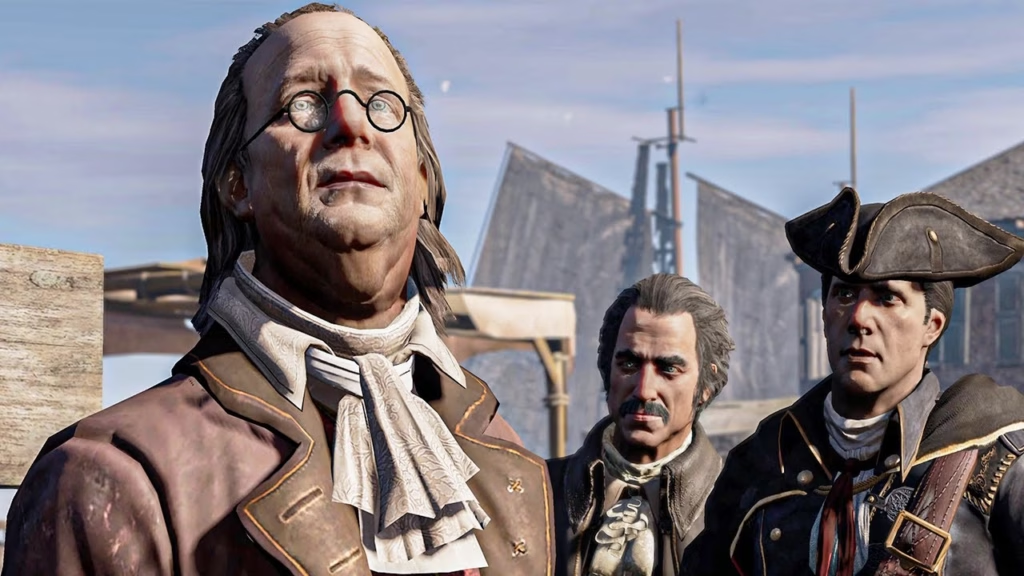
Benjamin Franklin was one of the Founding Fathers of the United States, an author, political theorist, inventor, scientist, musician, and diplomat. His contributions include the discovery of the electrical nature of lightning (the famous kite experiment), the invention of the lightning rod, bifocal glasses, and the Franklin stove. As a diplomat, he was instrumental in securing French support for the American Revolution. He is the only Founding Father whose face appears on the one-hundred-dollar bill without having been a US president.
In Assassin’s Creed III, Franklin appears as a memorable supporting character in the context of the American Revolution, where the protagonist Connor encounters him at various moments, including the iconic kite episode during a storm. Before this, chronologically, he plays a significant role in Assassin’s Creed Rogue, set during the Seven Years’ War. In this title, he interacts with the Assassin Hope Jensen and the protagonist Shay Cormac, providing inventions and weaponry, such as a prototype grenade launcher, and later helps Shay in Paris gain entry to the Palace of Versailles. Throughout the franchise, he is portrayed as a clever, humorous man guided by his scientific curiosity, frequently getting involved in the middle of the secret conflict and having ties to both Assassins and Templars, without formally belonging to either group.
