Making a blockbuster video game is a massive gamble. Today, top-tier video games can cost well over $100 million to create. Studios spend years writing code, testing ideas, and building massive digital worlds. But what happens when the money runs out? What happens when a big company changes its mind? The project gets canceled.
When a major game is abandoned, it is not just a loss for fans. It is a major business event. A canceled game can shut down a studio, change how a publisher makes money, or leave a gap in the market that other companies rush to fill. Looking back at history, several canceled games had the potential to change the gaming industry forever. Some tried to push technology forward. Others tried to create new genres.
This report dives deep into the high-profile game cancellations that left a lasting mark on the business of gaming.
The Business of Vaporware
To understand why great games get canceled, you have to look at the business side. Games are not just art; they are products that must sell millions of copies to break even. The risk is huge. Between 2022 and early 2026, the video game industry went through a massive crisis. Companies had grown too fast during the pandemic. When growth slowed down, publishers panicked.
As a result, companies canceled dozens of games to save money. This led to a wave of layoffs across the globe.
Gaming Industry Job Losses (2022–2026)
| Year | Total Estimated Job Losses | Industry Context |
| 2022 | 8,549 | Industry slowdown begins; companies start early restructuring. |
| 2023 | 10,466 | North American and European studios are hit hard. |
| 2024 | 14,639 | The peak of the crisis; massive corporate downsizing and game cancellations. |
| 2025 | 5,477 | A slow recovery starts, though hiring remains very cautious. |
| 2026 | 2,700 (Q1) | Projected stabilization, but major risks remain. |
This severe job market shows how tight money has become. Publishers are no longer willing to gamble. If a game misses a deadline or goes over budget, the publisher will pull the plug.
Corporate Strategy vs. Creative Vision
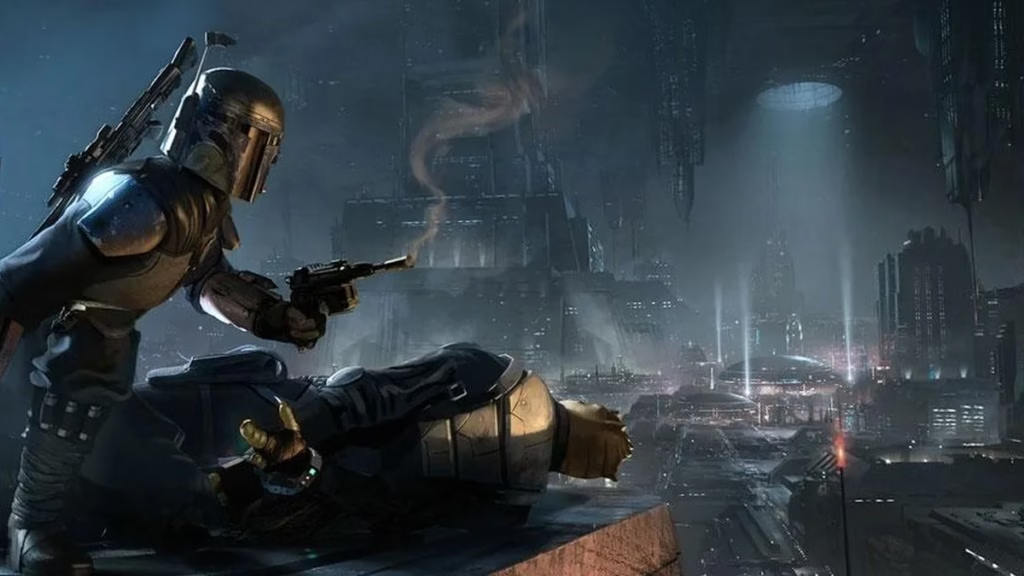
Sometimes, an amazing game is canceled simply because a company gets bought out.
Take Star Wars 1313 for example. Announced in 2012 by LucasArts, this game promised a dark and mature look at the Star Wars universe. Players were going to control the famous bounty hunter Boba Fett. The game used incredible new technology that captured actors’ movements in real-time. It looked like a cinematic masterpiece.
However, in late 2012, Disney bought Lucasfilm for $4.05 billion. Disney did not want the high financial risk of making games themselves. In 2013, Disney shut down internal game development at LucasArts. They decided to license the Star Wars brand to Electronic Arts instead. Even though Lucasfilm executives later called the game’s art “gold,” Star Wars 1313 was canceled and never released.
Rockstar Games faced a different issue. The creators of Grand Theft Auto were working on a Cold War spy game called Agent. It featured huge ideas, like car-submarines and space shootouts. But as they built it, Rockstar co-founder Dan Houser realized a problem. The tight suspense of a spy movie does not work well in an open-world game. Players need freedom, but spies need strict plans. Instead of releasing a bad game, Rockstar moved their team to work on Grand Theft Auto V. Agent faded away and was quietly canceled.
The Lost Legends: Games We Never Played
Many canceled games still haunt the minds of fans and developers. Here are some of the most famous games that never made it to store shelves:
- P.T. (Silent Hills): This was a short, playable teaser directed by Hideo Kojima. It was terrifying and completely changed the horror genre. But after a public fight with publisher Konami, the full game was canceled. Konami even deleted the teaser from online stores. This created a “creative black hole.” Indie developers rushed to make games just like it, and it even inspired the hit game Resident Evil 7.
- Prey 2: Human Head Studios built a stunning demo about an alien bounty hunter. The story had a wild twist where the hero constantly died and woke up in clone bodies. Publisher Bethesda canceled the game, stating it did not meet quality standards. However, rumors suggest the studio rejected a buyout offer, leading the publisher to freeze their funding.
- Batman: Gotham By Gaslight: Before the famous Arkham games, Day 1 Studios tried to make a Batman game set in Victorian England. Players would hunt Jack the Ripper. The test footage looked incredible, but publisher THQ failed to secure the Batman rights.
- Daredevil: This was planned as a huge open-world game, much like Grand Theft Auto 3. Sadly, Sony and Microsoft kept forcing new ideas and changes on the development team. The messy process ruined the game before it could be finished.
- Legacy of Kain: Dead Sun: This game aimed to bring back a classic fantasy franchise. It promised a deep story and modern combat, but the publisher stopped the project halfway through.
- Bioforge 2: Designed as a sequel to the hit 1993 game, this project was shrunk down to an expansion pack before being fully canceled. It left fans with a cliffhanger ending that will never be solved.
- Kerbal Space Program 2: This space flight simulator was highly anticipated because the first game taught real people about spaceflight. Sadly, the sequel was rushed, mismanaged, and ultimately shut down by publisher Take-Two Interactive.
Expensive Mistakes and Silver Linings
Sometimes publishers force studios to make games they do not want to make. Microsoft made a huge mistake with Fable Legends. They pushed Lionhead Studios to make a free-to-play, multiplayer game. This was very different from the single-player games the studio was famous for. Microsoft spent about $75 million and three and a half years on the project. In the end, it just was not fun. Microsoft canceled the game and closed the 20-year-old studio entirely.
Microsoft also canceled Scalebound. Developed by PlatinumGames, this title featured a hero fighting alongside a massive dragon. But the team could not get the game to run well on the Xbox One hardware. The studio was spread too thin across multiple projects and kept missing deadlines. Microsoft finally pulled the plug in 2017.
But a cancellation is not always a complete disaster. Consider Blizzard’s Project Titan. Blizzard wanted to create a massive online game to replace World of Warcraft. They spent years and $80 million on the project. But the core game was boring. Rather than releasing a bad product, Blizzard canceled it. They took the best parts of the code and art and used them to create a new game. That game was Overwatch, which went on to make billions of dollars.
Crowdfunding Nightmares
Not all canceled games are killed by big corporate publishers. Many games fail after raising millions of dollars directly from fans on websites like Kickstarter.
- The Mandate: This game promised to be an epic space opera. The creators raised money and even hired actors from Game of Thrones. They recorded music with a live orchestra before the game was even built. But they spent too much money too fast. The company collapsed, and the game died.
- That Which Sleeps: This strategy game looked incredibly fun and raised funds from excited fans. Sadly, the project fell apart when a developer reportedly ran off with the cash, ending both a friendship and the game.
Lessons for the Future
The history of canceled games proves that talent and big ideas do not guarantee a finished product. Today, game publishers are trying hard to avoid these costly mistakes.
To reduce risks, companies are looking at new tools. They are using Artificial Intelligence (AI) to test games for bugs and to translate languages faster. This saves millions of dollars in testing. Publishers are also changing how they sell games. Instead of relying only on one big $70 purchase, they are offering subscription services, tiered pricing, and even exploring ad-supported games on consoles.
The industry is learning that it is better to cancel a bad game early than to spend a fortune trying to fix it. The graveyard of canceled games is filled with broken promises and lost money. But those lost games also leave behind valuable lessons, new technology, and fresh inspiration that continue to shape the games we play today.
